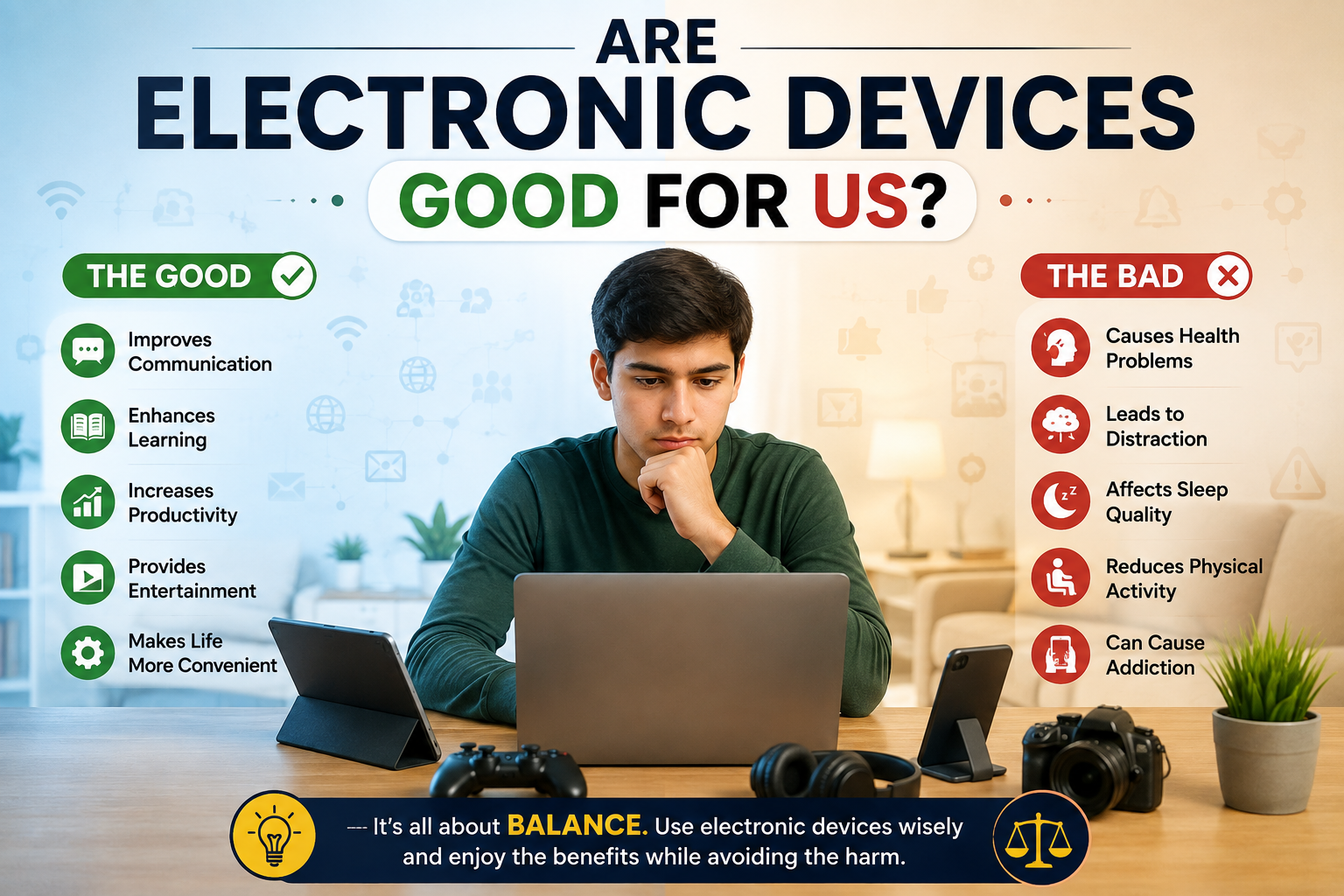
Understanding Are Electronic Devices Good for Us in Everyday Life
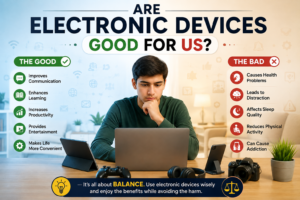
She remembered when her family would use to bond by playing board games together in the evenings. These days, however, people come together but look at their own screens. There arises a crucial question – are electronic devices good for us? The answer to the question depends on how the technology is used and balanced in our lives.
The advent of electronic devices has changed the world of communications, education, medicine, and entertainment. Despite being extremely useful and convenient, they might cause some problems for their owners if they are used excessively. It is necessary to know about the pros and cons of technology in order to make right conclusions.
The Development of Electronic Devices
Electronics have evolved significantly in recent times. While computers took up whole rooms in the earlier years, modern smartphones are small enough to fit in one’s pocket and accomplish what used to take many machines to achieve.
Due to innovations, technology is available for everyone irrespective of their age group. Smartphones, tablets, laptops, watches, and digital assistants help people in their communication, studies, purchases, health, and business dealings.
Picture the case of a university student getting ready for a major examination. Without having to waste time looking for books in a library, he or she will have access to many learning materials via the Internet within a very short period.
Organisations have equally seen considerable progress. Technology allows for easier communications, easier project management, excellent customer service, and teamwork, thus making sure that organisations function effectively regardless of their geographic location.
Are Electronic Devices Good For Us When Used Responsibly?
The effects of using electronic devices vary according to the way individuals decide to use them. By being responsible, the devices can help boost productivity, build good relations between users and create great learning experiences.
Students will find educational sites, online classrooms and research software providing learning material that was hard to reach before. Similarly, teachers are provided with the technologies, making the teaching process much easier.
The healthcare professionals nowadays make use of electronic devices to keep track of patients, interpret health-related information, and communicate with other experts across the globe. All these advancements have facilitated quick and better diagnosis of diseases along with improved treatment plans.
In cases where family members live far away from each other, video calling, instant messaging, and social networking sites help them to stay connected.
It is evident that when technology is used in order to support human goals, it turns into a tool for development.
Technology and Modern Education
Education has become more flexible thanks to electronic gadgets. Learners have an opportunity to study online, discuss ideas online and use digital libraries almost everywhere.
Learning programmes that are interactive make students curious while ensuring that complex ideas become easier to understand. Educational videos, simulations, and online tests are interesting methods for improving education inside the classroom.
Teachers get assistance from digital evaluation tools that make their job easier and help them learn about the progress of their students. Online education tools allow parents to more effectively keep track of their children’s educational success.
Even though there is still value in the conventional methods of instruction, technology keeps expanding educational possibilities for the learners worldwide.
Improving Communication Throughout the World
There have been major developments in the field of communication. Communication is now easier and faster than it has ever been. E-mail, messaging applications, and video conferencing applications make sure that people get connected no matter where they are.
People work together from all over the world without even travelling and keep their family members informed of everything despite staying far apart. In case of any kind of emergency, the faster communication can prove to be life-saving.
Technology has changed communication in society, making it easier to acquire information while at the same time providing chances for collaboration on a global scale.
Advantages for Healthcare and Everyday Life
Electronic devices have revolutionised healthcare in many surprising ways. With the help of electronic gadgets, doctors can conduct proper diagnoses of diseases, monitor patients remotely, and offer timely recommendations to patients regarding the treatment procedures.
There is also increased adoption of wearable devices. Smartwatches and fitness devices measure heart rate, sleep patterns, and physical activity, among other health parameters. Individuals will be in a position to track their activities and make lifestyle decisions based on the available information.
Older people usually benefit from electronic devices in terms of being independent. For instance, with medication reminders, emergency alert systems, and monitoring, older people can take care of their own health independently, whereas their relatives will be aware of their state.
Technological progress helps people with disabilities by means of screen readers, voice assistants, hearing aids, and mobility assistance devices. The development of such technologies leads to increased accessibility for more individuals.
The Challenge of Using Too Much Technology
Many humans additionally enjoy the difficulty of maintaining a healthy picture-life consistency due to the fact that the generation continues with them connected consistently. Notifications, emails, and updates on social media can also disrupt awareness and the range of euphoria and stress throughout the day.
Children need special attention when using electronic devices. While age helps with reading, asymmetrical screen time can additionally reduce opportunities for extracurricular activities, conversations, and creative play.
Children need special attention when using electronic devices. Although the generation promotes expertise, excessive screen time can additionally reduce opportunities for outdoor play, realisation, and creative play.
Parents and educators can inspire balanced habits with the help of setting convenient rental days, selling physical exercise, and increasing opportunities for meaningful offline stories.
Balancing Technology for Health Benefits
Technology in itself is not wholly good or bad. It all depends on how people choose to utilise their gadgets.
Healthy technology practices entail having breaks from the screen, having the right posture, not using your device late in the night, and spending some quality family time without technological disturbances.
Many people who have made it in life schedule certain times when they will read their emails and messages and not be online all the time. It helps one concentrate and relieves stress.
One of my friends always leaves his cell phone in the other room at dinner. It felt unusual at first; however, the family eventually realised richer conversations and more powerful relationships. Small changes will lead to major gains in time.
The Future of Electronic Gadgets
Incredible advancements in technology keep emerging every other time. Artificial intelligence, wearable technology for health purposes, smart home gadgets, virtual reality, and automobiles have taken shape in people’s everyday activities.
Future technological devices might bring about improvements in areas like education, transport, health care, sustainability, and efficiency in work. Alongside their development, proper use is very important.
Businesses, educational institutions, and governments have responsibilities in ensuring digital literacy as well. By teaching people to use technology responsibly, we will get the maximum benefit out of it and minimise any possible harm.
The future holds a lot of promise, but the people need to continue to develop good habits which will put humans above technology.
FAQ
Do electronic devices help students?
Yes. Electronic gadgets provide students with access to courses on the Internet, virtual libraries, video courses, and other forms of electronic teaching methods. They facilitate research and cooperation when applied correctly.
Do electronic devices impact our health?
Yes. They could lead to eye problems, bad posture, sleep problems, and less exercise, but by keeping healthy screen routines, taking breaks, and combining online and offline time, one could avoid these negative effects.
How can families prevent too much screen time?
One could create limits for the time spent in front of screens and have time outside, no devices during mealtimes, and communicate with each other while doing something fun together.
What are the major benefits of electronic devices?
They make communications easier and help in education, healthcare and entertainment. They ensure efficient operation of companies and connection of people all around the world, providing access to useful information and services.
How can one use technology properly?
The appropriate use of technology means imposing time restrictions on using gadgets, safeguarding oneself from the disclosure of any personal information, utilising electronic devices efficiently, sitting in the right position, taking breaks, and keeping healthy relationships between real-life and online interaction.
Conclusion
Indeed, the creation of technology has provided us with many conveniences and numerous possibilities for education and communication. Being acquainted with the topic “Are electronic devices good for us?” allows us to understand that such devices should be used in a proper way in order to gain the biggest profit from their usage.
With the further development of innovations, people can be sure that electronic devices will be very helpful for their personal and professional development. People who make the right decisions concerning using technologies, protect their health, and continue learning new things every day will definitely reap the rewards from them.







Post Comment