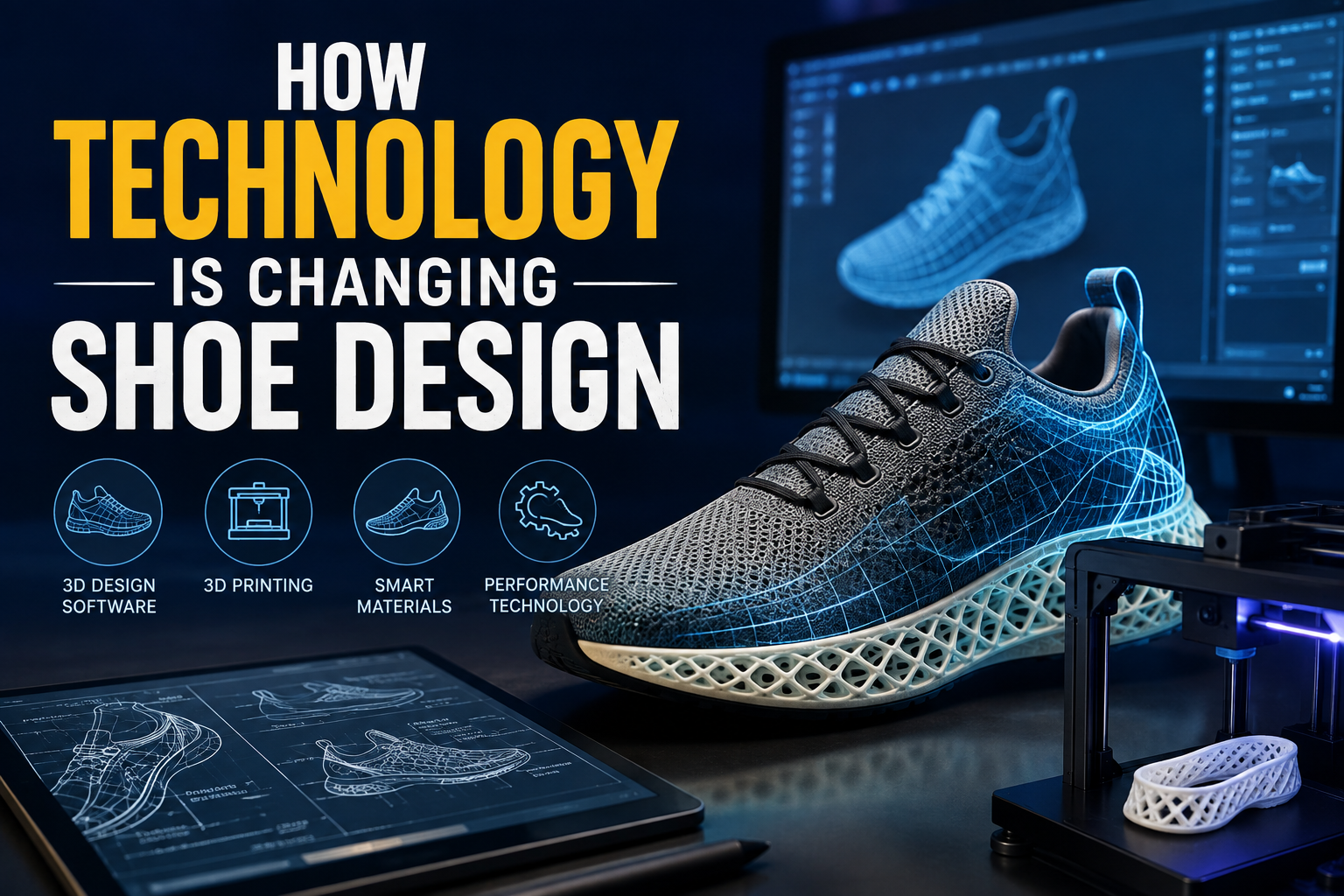
How Technology Is Changing Shoe Design for a Smarter Future
It might seem that making a pair of shoes is just a matter of selecting a shape, color, and material, but there is a lot of thinking involved behind the design process. Modern shoes need to be comfortable, supportive, durable, high-performing, and fashionable according to the ever-changing demands of customers. All of these improvements have been made possible by means of a unique blend of design and emerging technologies.
Thanks to technology, footwear designers now have the ability to test their designs through digital simulations, examine the movement of humans, and make more accurate models before moving on to production. Getting insight into how technology is changing shoe design will help us understand why contemporary shoes are better than traditional ones.
From Traditional Sketches to Digital Designs
how technology is changing shoe design For quite some time now, the shoe industry was highly dependent on traditional sketching, patterns, and prototypes. Although there is nothing wrong with such approaches, computer-aided designs have altered the initial steps of the creation process.
Using computer-aided design software, a designer can develop an electronic model of a shoe before making a physical sample. Designers can alter the shape, sole construction, materials used, colors, etc. without having to redo the whole design process from scratch.
This speeds up the design process while making it easier. In cases where the designer realizes that a sole is too thick or certain parts require reinforcement, such changes can be easily made electronically.
Also, electronic models can enhance communication among different parties, including designers, manufacturers, engineers, marketers, etc. Unlike traditional designs, which depend only on sketches or descriptions, everyone can work from the same model.
3D Printing Is Transforming Prototyping
One of the most important technological advancements that affect the creation of footwear is 3D printing. The making of a shoe sample usually takes up time, materials, and resources. However, 3D printing offers designers yet another option in which to create physical samples from their digital models.
Using 3D printing, designers can make parts like the midsole, structure, molds, and prototypes. This will allow them to analyze the physical structure of the design before moving on to mass production.
For example, a design team working on a new running shoe might create several prototype parts of the design using 3D printing and evaluate them for flexibility and support. In case one is better than the others, the designers would adjust their digital model.
3D printing does not replace the conventional production process. However, it becomes very helpful in situations where the company wants to test out different structures of the shoe that cannot be produced by the usual method.
How Data Helps Designers Understand Motion
Since a shoe should be compatible with the human foot, knowing how people move can give designers important information. Modern technology makes it possible to obtain and analyze the data about the motion, pressure, balance, and gait.
With sensors and motion capture, designers may learn how the foot interacts with the surface when performing such actions as walking or running. With pressure-mapping technologies, designers can see what areas have greater pressure on the sole.
All these data will affect the decision on cushioning, support, flexibility, and outsole design. Instead of guessing the performance of a product, designers will be able to base their decisions on measurable data.
For athletes, this approach is especially beneficial since the shoes should withstand the impact and motion involved in a certain sport activity. Designers can use data to find out if this particular construction would suit this kind of activity.
The Rise of Artificial Intelligence in Product Development
Artificial intelligence has been acknowledged as one of the most useful resources for designing products. With the help of artificial intelligence programs, large amounts of data can be processed, allowing us to spot certain patterns that could have been difficult to find manually.
Artificial intelligence could help in various aspects of the shoes’ development, including trend analysis, choosing the right materials and designs, and recommending the products. Designers would be able to use digital means to explore various combinations of shapes, colors, materials, and constructions.
Using artificial intelligence, companies could better understand the needs of their customers. Through the analysis of shopping habits and customer feedback, companies could learn about the needs of the shoppers.
Nonetheless, the application of artificial intelligence in no way eliminates the creativity of the designer. Even a successful shoe must have purpose, aesthetics, functionality, and knowledge of human requirements. The technology offers the possibilities and information, but the designers will be the ones making the decisions for turning these possibilities into a product.
New Options Are Emerging With Smart Materials
The selection of materials is an integral aspect of footwear design and development, with new technologies leading to more options for designers.
Contemporary footwear could include lightweight foam, engineered fabrics, recyclable material, dynamic cushioning, and other innovative materials. There are some materials that would allow flexibility in one area while providing stability in the other.
Smart materials may also respond to pressure, temperature, or movement. Although not every innovation is suitable for mass-market footwear, these developments show how material science is becoming closely connected with shoe design.
It is not just about changing the appearance of the shoes. These materials may potentially increase their performance and reduce their weight and environmental impact.
Customization Is Becoming More Accessible
Entering a shoe shop, one may notice the presence of different sizes of the same shoes. However, two people having similar sizes of shoes may have different feet due to the difference in such factors as width, arch, pressure, and movement of the foot.
The application of technology is allowing footwear companies to look for more personalized solutions.
The process of foot scanning is capable of collecting information regarding the measurements of the customer’s feet. The digital information can then be analyzed to determine the right size or even design customized products.
This could be very useful, especially in cases where customers experience challenges in finding comfortable shoes. Technology allows for consideration of each individual since it is not possible for everyone’s feet to have the same characteristics.
Customization may also extend beyond fit. Clients would get the chance to choose colors, materials, patterns, and many other elements of their design, while the digital manufacturing systems would allow companies to create customized products.
How Virtual Reality Changes the Design Process
Virtual reality allows designers to use alternative methods of visualizing shoes without even designing a prototype. A shoe in the digital world can be observed from various perspectives, changed, and placed in virtual settings.
This could enable design teams to analyze the aesthetics and proportions throughout the creation process. The retail and marketing teams could also employ virtual experiences to showcase products even before they hit the store.
AR could be employed for yet another possible application. Consumers could make use of the camera on their smartphones or similar technology to see how a shoe would look on their feet or try out various designs.
They could help bridge the gap between the digital idea and the consumer experience. These technologies would also help create opportunities for interactive shopping.
Technology Helps With Sustainable Design of Shoes
Nowadays, sustainability is becoming one of the key concerns of many shoe brands and customers. The use of technology could assist in researching ways to decrease material waste, enhance efficiency in the production process, and create shoes from recycled or different kinds of materials.
Digital prototyping would allow us to minimize the number of samples required. By using digital modeling, it would be possible to conduct research on different options before producing a physical sample.
The technology could also make production more accurate. In case when material is cut more precisely, the waste might be minimized. Some modern technologies would enable the manufacturer to produce components that have a structure of using material just in necessary places.
Even though the technology cannot make the footwear sustainable itself, the manufacturer requires a responsible source of material, production system, lifecycle of product, and disposal/re-cycling strategy.
Connected and Smart Footwear
Technology not only impacts the way shoes are designed but also their functionality.
There can be sensors and electronic elements in the shoes that gather data related to physical movement or activity. In accordance with different products, the connected shoes will have different purposes—from tracking steps to analyzing physical activity and providing certain feedback for certain activities.
For professional athletes, the connected shoes can provide valuable data concerning their performance. Other people can benefit from the shoes in various ways.
Nevertheless, there are several disadvantages related to the smart features of shoes. The electronic elements make the shoes heavier, more complicated, and more expensive.
Thus, while designing such a shoe, a designer needs to find a compromise between the technical elements and practical use of the shoe.
Faster Testing and Production
Technology has also brought changes to what follows after the design has been made. Automation, digital manufacturing processes, robotics, and quality control techniques can speed up the production process.
Manufacturers will be able to apply digital information in order to create a higher level of consistency in the products. Automation can do repetitive jobs with great accuracy, while digital quality control processes can help manufacturers discover manufacturing flaws.
Efficient manufacturing will allow businesses to react more quickly to changes in consumer preferences. Should the product become popular, efficient manufacturing processes will help manufacture it in larger quantities without redesigning the entire manufacturing process.
This does not imply that craft skills are becoming obsolete. There is still an immense need for skilled laborers, especially where specific goods are concerned or when a product needs to be finished with care.
How the Design of Shoes Will Develop in the Future
In the future, the design of footwear can be expected to become even more personalized, data-based, and environmentally friendly. Designers might be able to collect even more precise data on the ways people move and use different types of footwear.
AI would be helpful in creating and assessing design ideas, and 3D printing/digital manufacturing would become feasible for less mass production. The other thing is that the customer would get shoes made according to his/her size, not just in standard sizes.
Nevertheless, consumers are going to continue requiring beautiful products. Even though a shoe has an outstanding engineering structure, it should look nice and be comfortable. That is why the perfect shoe should combine engineering skills, creativity, fashion, and humanity.
The technologies may give the designers plenty of opportunities, yet the essence is always the same—creating desirable footwear.
FAQ
Why is technology vital for designing shoes?
Technology helps the designer develop, test, adapt, and manufacture the footwear in an easier manner. The use of digital modeling, data analysis, 3D printing, and other technological features enhances the precision and efficiency of the final product.
How can 3D printing be of use to shoe designers?
3D printing can assist in making prototypes that will allow designers to experiment with unusual forms or constructions without completely depending on standard manufacturing processes.
Can technology make footwear more comfortable?
Yes. Foot-scanning, pressure distribution, movement analysis, and advanced materials could enable designers to better understand their customers’ needs and to design shoes that fit or are more comfortable in some way.
Is artificial intelligence replacing shoe designers?
AI can help with research, analysis, concept development, etc., but there is still room for humans in the field. Creativity, reasoning, aesthetics, and knowledge of customers are all vital aspects of designing a good shoe.
Is it possible for technology to make shoe making environmentally friendly?
Technology could contribute to sustainability through minimizing physical prototypes, being efficient with materials, increasing precision of production, and using alternatives/recycled materials. Yet, sustainability requires certain business/production decisions to be made.
Conclusion
Innovation in the shoe-making process is not limited to the design sketches or prototype creation processes. Technology in the form of digital modeling, 3D printing, motion analysis, artificial intelligence, high-tech materials, virtual reality, and smart manufacturing enables designers to rethink the solution of old problems and explore new options.
Knowledge of how technology is changing shoe design makes clear the understanding that innovation is more than the addition of extra technologies to a particular product. The innovations that will work best will be the ones that solve real consumer problems without compromising on comfort, aesthetics, durability, and functionality. As technology evolves further, the future shoes will get more personalized and intelligent but still perform the one and same function as all the previous models—help humans move about comfortably and confidently.












Post Comment