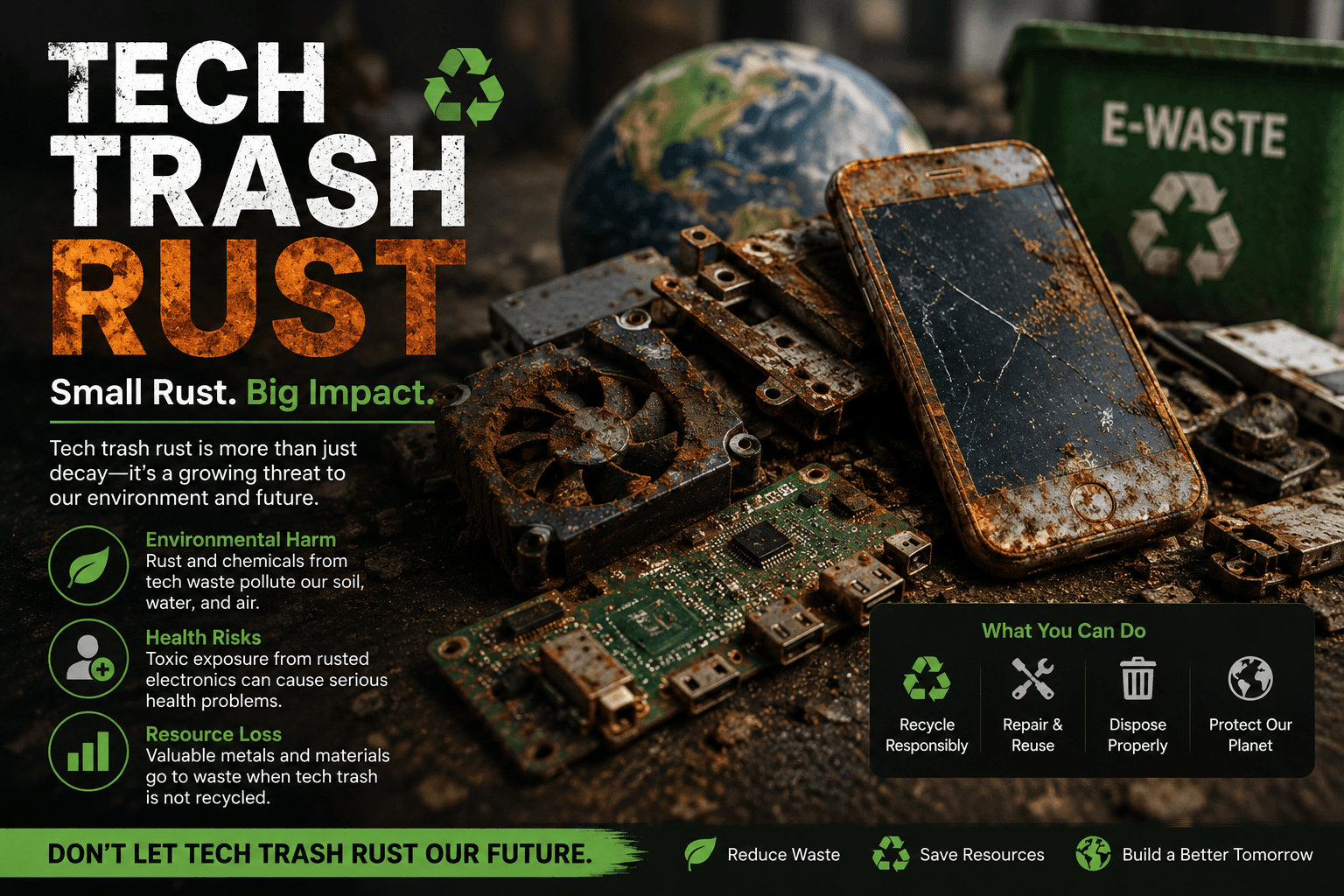
Hidden Truths About Tech Trash Rust That Everyone Should Know
Technology has influenced the way of working and communication for people. Each year there are thousands of new models, which replace the old models, leaving many obsolete devices unused. This emerging issue has become a serious concern for families, businesses, and environmental groups across the globe. Even though most people believe that obsolete technology remains unused and untouched, the truth is that such devices go through the process of corrosion and deterioration.
Consider the scenario where you discover an old storage box in your garage after many years. You then open the box and see that it contains an obsolete laptop computer, an old mobile phone, various tangled-up chargers, and a gaming machine. Most of these products are not functional anymore, and some may even have some form of rust on their metal components. It is always easy to dump all of these items in the garbage, but doing so will lead to complications that people might not expect.
Tech Trash Rust Knowledge Helps People Make Smart Decisions on Their E-waste. Be it homeowners, students, or businessmen, knowledge of how electronic products decompose will help them both save money and protect the environment.
What Is Tech Trash Rust?
‘Tech trash rust‘ can be defined as obsolete electronic equipment that has started deteriorating due to corrosion, oxidation, or moisture as it turns into electronic waste. Though electronics consist of materials like plastics, glasses, and valuable metals, there are some metals that have a tendency to interact with air and moisture.
Typically, rusting takes place on iron and steel components, while other metals are affected by the problem of corrosion. The process not only affects the performance of the devices but also reduces the efficiency of extracting useful materials for recycling purposes.
Many think that the electronics will last forever if they are kept untouched. However, electronics kept idle keep aging. They start leaking, become corroded, or just lose contact efficiency. This is why the issue of rusty electronics should not be overlooked.
Causes for Increasing Electronic Waste
E-waste has emerged to be one of the most rapidly increasing waste streams around the globe. New cellular phones, laptops, TVs, smartwatches, and appliances for home usage come into the market each year. With the improvement in technology, people replace their old devices with new ones.
Some of the factors causing this trend include:
- Technological innovations
- Shorter product life cycles
- Affordable upgrades
- Consumer demand for new features
- Limited repair of older devices
The environmental problem caused by tech trash rust is magnified when the electronic products are disposed of without proper planning. This is because electronics exposed to the outside environment or kept in wet places will corrode faster.
How Does Rust Form in Electronic Appliances?
While most associate rust with car parts or gardening implements, it must be noted that there are metallic components present in electronics which may become rusty.
Causes of rust formation include the following:
Humidity
Humidity slowly works on any exposed metal contacts within your computer, television sets, and other appliances. Even a trace of moisture starts the process of oxidation.
Effects of Water Damage
Floods, leaks, or storage in unsuitable conditions may make electronic equipment vulnerable to water. After entering the circuits, corrosion takes place and degrades their performance.
Improper Storage
Basements, garages, sheds, and outdoor storage facilities have temperature variations that foster the formation of condensation within idle devices, thus accelerating the process of rusting on tech waste.
Even when a piece of technology looks okay from the outside, it is likely that rust has started damaging the inner parts.
Environmental Impact of Rust on Tech Trash
The environmental impacts associated with tech trash rust are not limited to aesthetics. If electronic waste decomposes inappropriately discarded devices, hazardous chemicals can leak into the soil and water surrounding them.
Older products might have components that can only be recycled through specific processes. If the devices are dumped in a landfill and damaged, there will be a long period of time during which dangerous elements may be released.
Recycling the right way helps recycle materials like copper, aluminium, gold, and some plastics, thus saving mining resources and cutting down on manufacturing expenses.
If people take care to dispose of devices responsibly, communities become neater and save more resources. Little things add up to make big differences environmentally.
Useful Materials in Worn-Out Electronics
To many people, worn-out electronic devices have no value at all. This is far from the truth since these devices are made up of highly valuable materials.
Examples of some useful materials that can be extracted from old electronics include:
- Copper wires
- Aluminum body casing
- Gold-coated connectors
- Silver contacts
- Steel parts
- High-grade plastics
- Glass
But the problem is that tech trash can corrode, making the extraction process of these useful materials difficult.
That is why experts recommend that devices be recycled immediately after they become faulty.
Hidden Costs of Neglecting Tech Trash Rust
People think that having an old cell phone or laptop in a drawer will do no harm. However, neglecting such issues can be very costly for anyone over time. Ignoring tech trash and rust will lead to different kinds of problems, starting from environmental ones up to safety issues.
Let us imagine how one small business can suffer because of that. During years of operation, it replaces old computers, printers, and network infrastructure. Old devices are not recycled but are accumulated in a special storeroom. Later on, some moisture enters the building, and rust spreads on all of the equipment. It becomes impossible to recycle any materials, and the batteries start leaking. Such negligence becomes a costly problem.
Such a situation repeats itself everywhere, from private households up to offices and schools. The disposal process becomes much easier than cleaning everything in years to come.
Why It Is Important to Recycle Properly
Proper recycling is one of the best ways to address the rising problem of tech trash rust. Through recycling, specific devices can be separated so that valuable materials can be reclaimed and used for other purposes.
Typically, the process of recycling consists of the following steps:
Collection
Old devices can be collected through recycling centres, special events, and take-back programs of manufacturers.
Sorting
Devices are sorted by their type, quality, and material content.
Material Reclamation
Materials like metal, plastic, glass, and other parts are reclaimed by machines and specialists for further use in production.
Proper Disposal
Hazardous waste, which cannot be reused, is disposed of following the environmental regulations and not thrown away in landfills.
If more and more people recycle their devices, less raw material should be extracted from nature.
Electronics that End Up as Tech Trash
Every electronic item comes with an expiry date. Regardless of how one treats their electronic gadgets, after some time, they will become either obsolete or malfunctioning.
Some examples include:
- Smart phones
- Notebooks
- PCs
- Tablet computers
- Smart TVs
- Computer screens
- Printers
- Mouse and keyboards
- Game consoles
- Wi-Fi routers
- Hard disks
- Speakers
- Home automation gadgets
These items become tech trash rust over time if not disposed of appropriately.
Methods to Lower Electronic Waste from Businesses
Electronic waste is a big problem for businesses when upgrading the equipment. However, some planning may help decrease the unnecessary amount of waste.
These methods can be used by any organization:
- Use robust equipment with a long-life cycle.
- Always try repairing rather than purchasing new devices immediately.
- Offer working electronics to schools and non-profit organizations.
- Partner with accredited recyclers.
- Maintain the inventory list to purchase the necessary amount of equipment.
Many businesses that use these methods lower their expenses and create a positive image as environmentally friendly organizations.
Suggestions for Households
Families could do their part in minimising the amount of tech trash rust by following simple practices. These measures would only take a minute or two to accomplish but have lasting effects.
Keep unused devices in dry environments where temperatures remain constant. Moist environments are known to contribute greatly to rusting.
Take out batteries from unused devices for a long period of time. It prevents leakage.
Clean out all the private information from your electronics before you recycle or donate them. Security of data should never be overlooked.
Recycle faulty electronics; do not dispose of them as normal household trash. Most areas today offer easy access to recycling facilities for e-waste.
Last but not least, don’t stockpile devices “just in case”. If it has been out of use for years, it’s time to get rid of it.
Consumers’ Part in Making a Sustainable Future
All the purchases contribute to the amount of e-waste generated. Consumers can exert more influence than they realise.
Buying products that are easy to repair, using products from the companies which provide recycling services, and increasing the lifespan of current goods can significantly decrease the tech trash rush. It seems like throwing out one outdated cell phone cannot make much of a difference, yet just consider how many devices there could be in the world’s closets.
It takes lots of efforts to save the planet but sometimes just starts with choosing what should happen to the outdated laptop rather than leaving it to accumulate dust.
Electronic Waste Management Future Trends
Just like technology is developing, the ways of dealing with e-waste keep changing as well. Governments, technology manufacturers, and companies involved in recycling develop innovative approaches to make the process of managing tech waste less rusty.
Modern technology recyclers use sophisticated machinery which allows separating the materials much more effectively than was previously possible.
Some manufacturers even design their products in such a way that would make them easier to repair, upgrade, and recycle in order to extend the lifetime of their products.
Customers should help in promoting eco-friendly products as well. By choosing specific brands of technology, customers signal what they want from the technology market.
Simple Things That Help Avoid Tech Trash Rust
It is easier to avoid tech trash rust than to solve problems associated with it. Some simple things will help in extending the life of the electronics and prevent wastage.
Some of these things are as follows:
- Do not keep electronic gadgets in places with excess water.
- Dust your computer and accessories.
- Put covers on your portable devices.
- Do not keep electronics in extremes of temperature.
- Dispose of old gadgets through recycling rather than keeping them forever.
- Fix broken batteries.
- Back up files on your old device before retiring it.
Such small measures ensure that precious things are saved and there is minimal harm done to the environment. Also, such measures will cut down on costs since properly functioning equipment can serve for a longer time. There are cases where such small measures are forgotten, and unnecessary problems arise.
FAQs
What is tech trash rust?
‘Tech trash rust‘ refers to electronic gadgets which have been discarded and are already starting to degrade due to rust, corrosion, exposure to moisture, or simply neglect. The term emphasises the relationship between electronic waste and physical deterioration of materials.
Why is electronic waste becoming increasingly significant?
The issue remains relevant since technology evolves very quickly and most people replace their devices regularly, creating huge amounts of obsolete gadgets that should be recycled properly.
Can rusty gadgets be recycled anyway?
Yes. Despite the fact that tech trash rust can complicate the process, many valuable metals, plastics, and other materials from such gadgets can be recovered through certified electronic waste recycling programmes.
How to decrease electronic waste?
Waste can be minimised by repairing equipment, donating old devices, recycling correctly, buying lasting products, and not upgrading equipment if not required. This will also help reduce electronic waste deterioration over time.
Isn’t it reasonable to store old electronics at home?
Holding some backups is logical, but keeping many unused electronic appliances for long periods of time is likely to cause more problems than benefits, such as tech-trash corrosion, leakage of batteries and deterioration of materials. Recycling is better.
Conclusion
Although technology has advanced almost all the aspects of the current lifestyle, it comes with great responsibility. The increasing problem of tech trash rust highlights the fact that every electronic appliance has a life cycle, ranging from the moment when it is created up to the moment when it is disposed of.
The process of responsible disposal does not just minimise the clutter around the household; rather, it helps to conserve resources, ensure sustainable production and prevent toxic substances from getting into the ecosystem. Whether you are planning to replace your smartphone, get new computers for your office, or clear out those dusty storage boxes – it will make a difference.
Tech Trash Rust In case the next time you happen to find your outdated gadgets at the bottom of some closet, remember to reconsider dumping them into the trash can. Although recycling, repairing or donating your gadgets might look like an insignificant action, when repeated by millions of people it can be a very influential one.












Post Comment