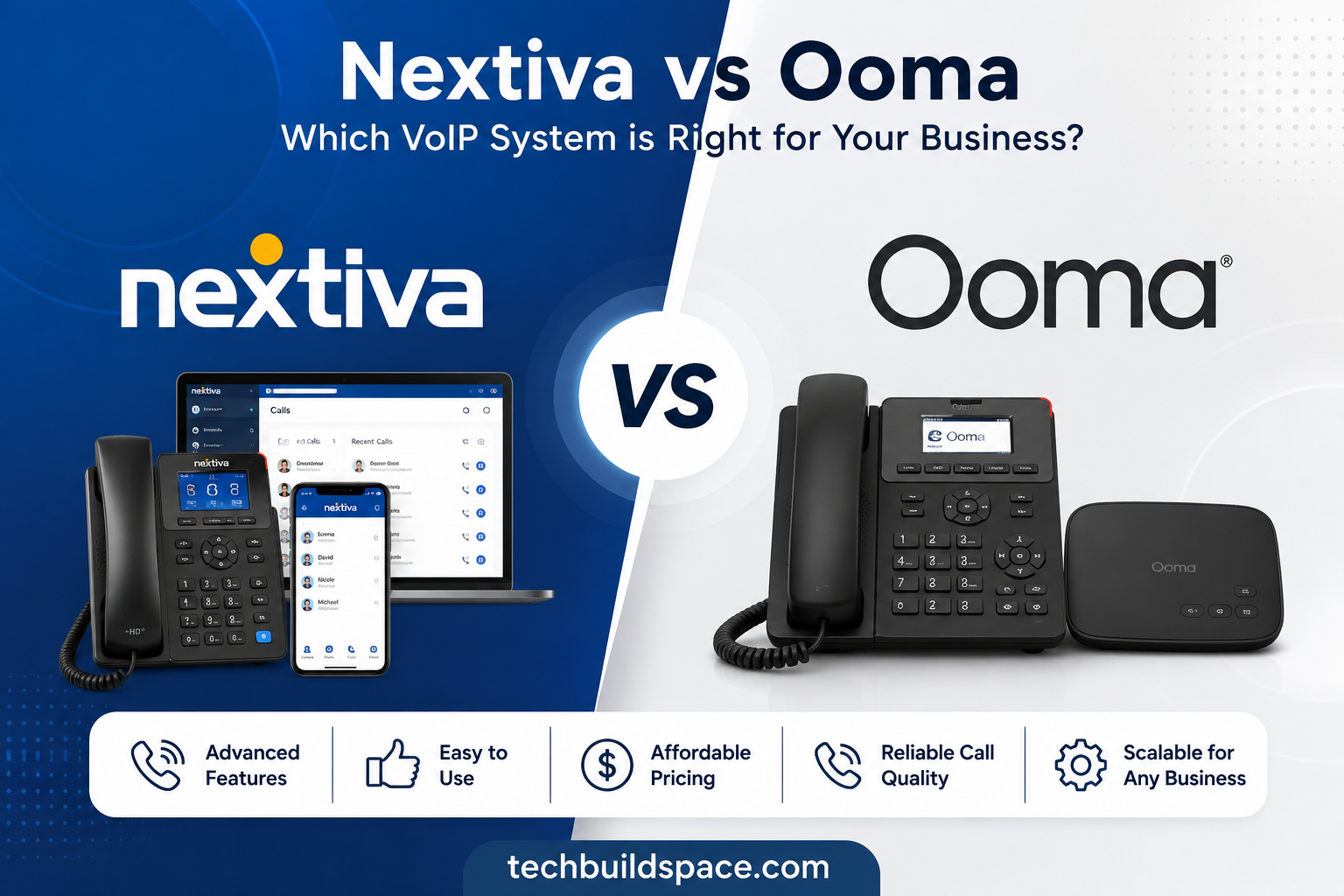
Choosing Nextiva vs Ooma for Modern Business Communication Solutions
In today’s corporate world, there is a need for companies to have communication systems which enable productivity and collaboration and offer great experiences to customers. The choice of the right technology plays a very big role for business efficiency and future growth. A comparison of Nextiva vs Ooma remains popular among businesses looking for reliable and scalable solutions that will make business communication efficient and easy, both inside and outside the organization.
It is evident that the modern workplace needs cloud communication technologies that allow working remotely and meeting changing customer needs. Knowledge about the strengths and weaknesses of Nextiva vs Ooma will help companies to choose the best solution according to their needs and budget in the future.
Nextiva and Ooma Understanding
The field of communication technology has seen tremendous growth in recent years. The old phone systems are slowly giving way to flexible cloud-based solutions that can accommodate companies of all sizes. This development has rendered the comparison of Nextiva and Ooma more and more important for efficient and economical communication purposes.
Both providers offer services based on the Voice over Internet Protocol (VoIP), which helps to make communications better and easier at the same time. However, these platforms differ in the way they approach business communications. Distinguishing these two providers is extremely important when choosing between them.
For instance, think of an expanding company that grows its staff throughout different locations. In such a situation, there is a great need for proper communication of workers, cooperation of managers, and fast response of customers. Therefore, the importance of choosing the right communication platform rises considerably.
Businesses tend to have diverse needs in regard to certain features. Some may care about ease of use and economy, and others might prefer advanced integrations, analysis, and customer experience capabilities. Thus, it is helpful to compare the priorities of businesses.
Why Businesses Compare Nextiva vs Ooma
Organizations make many efforts towards purchasing appropriate communication technologies, as they have an impact on productivity, customer satisfaction, and efficiency in the workplace as a whole. Hence, choosing proper tools requires certain deliberation.
First, there is an issue of scalability. It is critical for growing businesses to implement technologies which can adapt to changing workforce needs without causing operational complications. Often, flexible communication technologies help businesses grow sustainably.
Secondly, there is the matter of easy implementation. Companies are interested in solutions that cause minimum disruptions and provide users with easy access to the communication process. The modern workplace is largely dependent on technology that supports collaboration irrespective of the geographical location.
Finally, there is the question of reliability. Interruption of communication can harm customer relations and affect the productivity of an organization. Hence, when considering such options as Nextiva vs Ooma, companies pay much attention to their reliability and customer support performance.
Core Communication Features
The cloud communication platform does much more beyond just being able to offer phone calls. There is a growing demand for fully integrated solutions offering not only messaging, video calls, and collaboration options but also the ability to manage relationships with clients all at once.
These companies offer complete packages of communication tools aimed at increasing work productivity. But in the process of choosing between Nextiva and Ooma, the company should pay attention to what tools will be more useful for achieving its goals.
Modern technologies make a great impact on communication processes inside and outside of the organization. Employees get better access, while customers have to expect the promptness and individual approach.
Any technology investment is dependent upon the choice of the right solution. The company should carefully analyze its needs in communication before making an investment in cloud services.
Features Comparison
Today’s companies demand that communication providers deliver not just dependable voice solutions but also features such as video conferences, team chat, call handling, analytics, and customer relations management integration in order to compete.
Speaking about Nextiva vs Ooma, both services provide great tools that will enhance communication in the office. Nextiva has proven itself in terms of unified communications. whereas Ooma is famous for being user-friendly and cheap. Knowing these differences allows understanding what type of service may be beneficial for specific companies.
Employee collaboration solutions are also very important for organizational productivity. Companies comparing Nextiva vs Ooma can focus on the functionality of the solutions for remote work environments, customer service, and company communications. In most cases, selecting appropriate technologies positively affects both employees and customers.
Another aspect to take into account is administrative convenience. The system must be easy to use for users and admins at the same time and must have scalable possibilities.
Pricing and Scalability
Money issues definitely affect any tech purchases within all companies regardless of their size. All companies need services which will be valuable but won’t create any additional complexity for the business or require too much money.
One of the features which is often taken into account when comparing Nextiva vs Ooma is the affordability and scalability of the product. The smaller businesses tend to prefer more affordable and simple products, while larger companies may require more complex functionality.
Scalability means not only adding more employees to your company. You need to think about your future communication needs regarding integrations, collaboration, reporting, and engaging customers. Choosing between Nextiva and Ooma can greatly benefit you if you choose technologies which can meet both current and future needs.
Thoughtful investment in communication infrastructure often benefits the company’s future development.
Integrations and Security
Modern workplaces rarely depend upon isolated technologies. Communication platforms increasingly operate alongside customer relationship management systems, productivity applications, and project management tools designed to improve organizational efficiency.
Businesses researching Nextiva vs Ooma should therefore evaluate integration capabilities carefully. Seamless connectivity between communication technologies and existing software environments frequently improves productivity while simplifying administrative responsibilities across departments.
Security aspects need to be considered just as well. Communication platforms regularly handle confidential corporate data and need to have measures in place that address possible threats. Good security policies play an important role in fostering trust among employees and safeguarding sensitive business information.
Nextiva vs Ooma: Comparing the two options in terms of security should be one of the top priorities for organizations.
Who Are The Beneficiaries?
All companies have different communication needs that are determined by their workforces and customer expectations. Hence, the need to select appropriate technology involves proper assessment and should not just be based on popularity and feature presence.
Simple, inexpensive, and easy-to-implement solutions appeal to many small businesses. Similar considerations apply to the growing firms when selecting communication platforms that can adapt easily to changing needs.
The discussion surrounding Nextiva vs Ooma demonstrates that neither solution represents a universal choice suitable for every business environment. Instead, successful technology investments depend largely upon selecting platforms aligned effectively with organizational priorities and long-term strategies.
Companies seeking advanced communication ecosystems may prioritize extensive collaboration capabilities and integration options. Conversely, organizations emphasizing ease of use and cost-effectiveness may identify alternative advantages better suited to their requirements.
Pros and Limitations
Both modes of communication have their benefits that can make an organization much more efficient in its work. People comparing Nextiva and Ooma in their business are likely to appreciate the unified communications abilities of Nextiva.
Ooma similarly offers valuable advantages involving affordability, intuitive functionality, and accessible implementation processes designed particularly for smaller organizations. These strengths contribute positively to its growing popularity among businesses seeking straightforward communication solutions.
Limitations are also key areas that need to be kept in mind while making the decision on implementation. Priorities of an organization differ vastly in various fields, which makes it necessary to make a proper assessment before selecting any technology.
It is best for an organization if communication technologies suit their needs and at the same time contribute towards sustainable growth.
Which One Should You Choose?
The choice between two platforms for communication will depend on your company’s priorities, financial situation, and long-term plans. When making a decision regarding Nextiva vs Ooma, the requirements must be evaluated first.
If your company is looking for an all-encompassing solution for communication, then Nextiva is something you might want to consider. The unified communications environment of Nextiva can be quite helpful for companies that plan to grow in the near future.
If your company requires affordable and easy-to-use technologies, then Ooma can be a good fit. Small companies can benefit greatly from technologies that do not bring any excess complications into communication.
This debate about Nextiva vs Ooma makes it clear that making a decision about technologies does not come down simply to features.
FAQ
What is the distinction between Nextiva and Ooma?
Both platforms provide cloud-based solutions to business communication. Nextiva offers business communication that concentrates more on unified communication and advanced business capabilities, while Ooma provides easy and affordable solutions for efficient business communication.
Which is the better platform for small businesses?
A small business can derive benefits from both these platforms. Companies analyzing Nextiva vs Ooma should take into account the number of employees, financial constraints, and prospects of development.
Is Nextiva more scalable compared to Ooma?
The scalability and comprehensive communication solutions of Nextiva are often highly appreciated. But Ooma also provides scalable solutions, which can be of great help to enterprises looking for flexible and affordable communication technologies.
Can businesses use these platforms for remote teams?
Yes. Both business communication platforms have options for collaborating with remote and hybrid workforces and keeping employees connected irrespective of their location.
How should enterprises make a choice between Nextiva and Ooma?
Enterprises should consider communication needs, integration capabilities, price factors, and future plans when implementing certain technologies. Selecting appropriate technology will result in successful outcomes.
Conclusion
Careful consideration is needed to choose an effective platform that meets the required functionalities and scale and fits into organizational priorities. The analysis of Nextiva vs Ooma clearly shows how different solutions can meet the varied needs of businesses. Knowledge about both platforms will allow organizations to make a wise investment into technologies that help improve collaboration, increase productivity, and ensure sustainable development in today’s competitive and technology-driven environment.
Communication platforms continue playing an important role in modern businesses. Careful assessment of needs by companies will help choose solutions that will bring significant value to the organization. Making the right investment in the technologies today will allow businesses to be ready for the future.












Post Comment