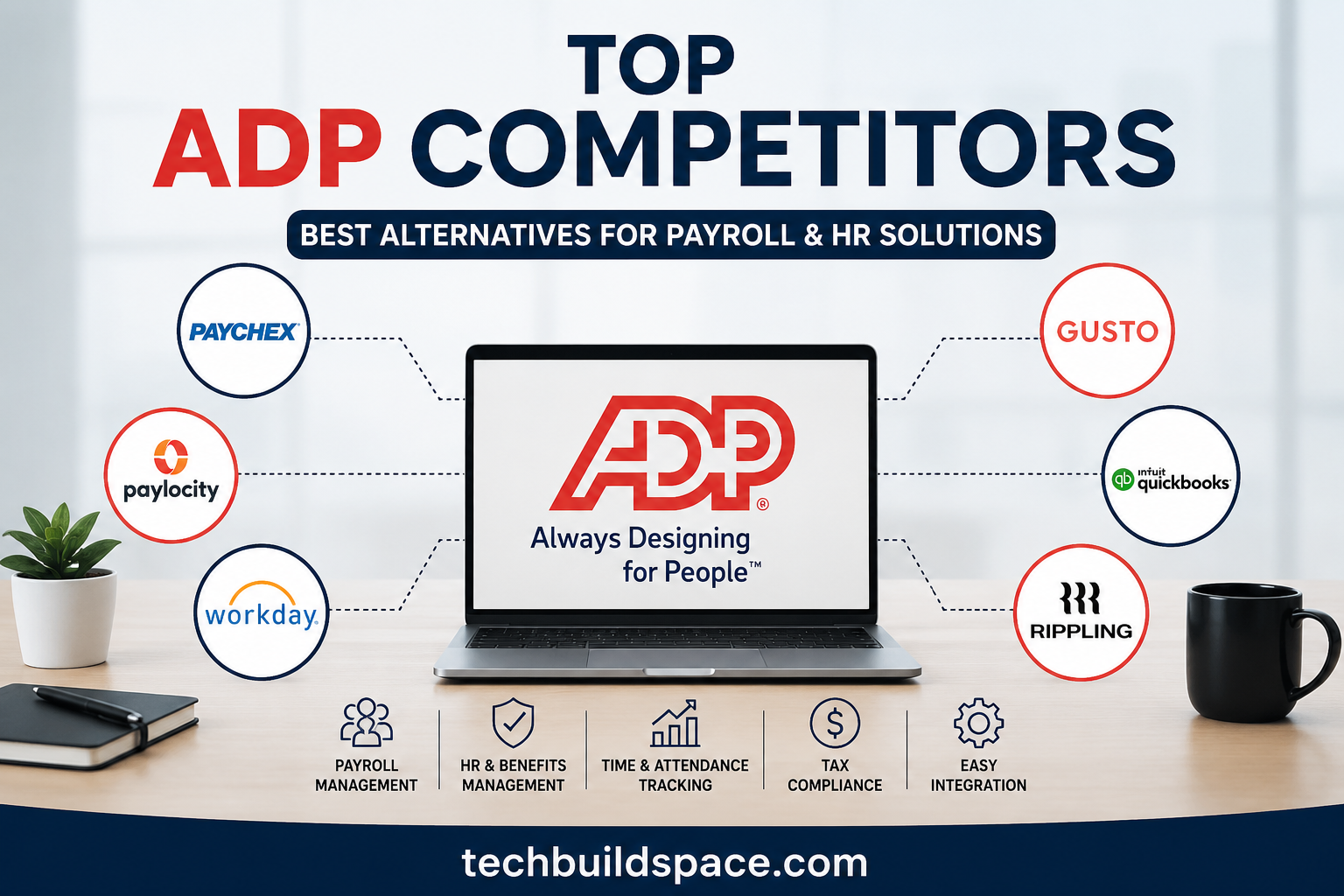
Best ADP Competitors Worth Choosing for Payroll & HR
For modern enterprises, there is a need for systems that will help in streamlining operations, facilitate compliance and manage employees effectively. With the continued changes in requirements, many firms are seeking better options that can offer more flexibility and scalability. The identification of an appropriate ADP competitor is becoming increasingly critical for those companies that wish to have reliable and effective HR technology solutions today.
In the current business world, the use of IT systems has become very crucial in improving the experience of employees. The selection of an appropriate ADP competitor helps firms in choosing the best solution to match their business goals and financial considerations.
Understanding the Need for an ADP Competitor
Human resource management has transformed significantly during recent years. Organizations increasingly expect technology platforms to provide comprehensive capabilities extending beyond payroll processing alone. Modern companies need integrated solutions for onboarding, benefits administration, compliance management, workforce analysis, and performance measurement at the same time.
It is precisely this trend that has led to conversations about ADP’s competitor gaining more and more attention in the business community around the world. The appropriate technology solution choice can be very useful not only for enhancing productivity but also for increasing employee satisfaction levels.
Consider a fast-growing company that hires new employees at several different sites. The process of payroll processing and meeting all necessary compliance standards will inevitably become more complicated. Companies facing such problems usually start considering ADP competitors and see if they would suit their needs.
Investments into technology must help the company grow sustainably. Technology solutions that can easily adjust to changes in workforce expectations and regulations are very valuable for any organization.
Why Businesses Explore ADP Alternatives
Each company has its own priorities that depend on the number of workers employed in it, industry standards, and budget constraints. As a result, companies tend to assess various options before spending money on technology purchases.
One important reason businesses consider an ADP competitor involves customization capabilities. Some organizations prioritize highly flexible platforms capable of supporting specialized operational requirements without excessive implementation challenges or unnecessary expenses.
The need for scalability is equally critical. Businesses that are growing find considerable benefit in workforce management software that caters to a growing number of employees without compromising efficiency. Choosing the right ADP competitor often ensures business growth by making future technology changeovers unnecessary.
The experience one gets from customer support is another factor that greatly affects purchasing decisions. Organizations want service providers who can help them out during implementation and subsequent operations. Effective support plays a critical role in achieving maximum benefits from workforce management expenditure.
Important Attributes to Consider
Modern HR and payroll platforms provide considerably more than administrative functionality alone. Businesses evaluating an ADP competitor should identify features aligned effectively with both immediate operational requirements and anticipated future objectives.
Payroll automation capabilities remain particularly valuable for organisations seeking to minimise administrative workloads while improving accuracy. Automated tax calculations, direct deposit services, and employee self-service functionalities contribute positively to workplace efficiency.
Compliance management tools have similarly become increasingly important as regulatory environments continue evolving across industries. Businesses frequently prioritise solutions capable of simplifying compliance responsibilities while supporting responsible workforce management practices.
Employee engagement capabilities additionally deserve thoughtful consideration throughout technology selection processes. Modern organisations acknowledge the connection between employee experience and business sustainability. Employee management systems that support communication, individual development and access can be quite valuable for companies’ success.
It is important to choose appropriate technologies while taking into account functionality, cost-effectiveness, scalability and company priorities. Businesses that invest time evaluating their requirements are often better positioned to implement solutions supporting both present and future objectives successfully.
Top Benefits Provided by ADP Competitors
A business that is looking to adopt a great workforce management system will always look for those systems that help make work easier on a day-to-day basis but also help the business grow in the long run.
In assessing an ADP competitor, one should think about if the systems provide full payroll processing, employee self-service, time and attendance, and benefits administration solutions. Choosing those which are suitable for organisational needs often leads to increased effectiveness and higher employee satisfaction.
The use of automation is especially important in modern business. Solutions that have the ability to minimise repetitive administrative work, thereby minimising errors, are greatly appreciated in businesses. Most companies seeking to compete with an ADP competitor emphasise automation tools for increasing productivity.
Likewise, reporting and workforce analytics are key drivers to sound decision-making. Availability of good data allows companies to detect trends and make strategies that will lead to sustainable growth in their businesses.
Pricing and Scalability Issues
Money issues play a role in all the investments in technology, no matter what the scale is. Companies usually look for solutions that would be able to offer good value while not adding too much complexity and high costs.
Interest in an ADP competitor increases because there is more interest in flexible pricing options that can fit companies with different workforce needs. Small companies prefer affordable software solutions, while bigger companies need scalable software.
Choosing scalable technologies is crucial for organisations that plan their future growth. Companies considering an ADP competitor need such technologies that will be able to adapt and grow together with operational and workforce changes.
It is important not to make investments in technologies that would force companies to switch platforms regularly. Sometimes, good planning leads to success.
Integration and Security Capabilities
Modern workplaces depend increasingly upon interconnected technologies supporting productivity and collaboration across departments. Workforce management platforms therefore benefit considerably from seamless integration capabilities that improve operational efficiency.
Organisations comparing an ADP competitor should carefully evaluate compatibility with accounting software, productivity applications, customer relationship management systems, and communication platforms currently supporting daily activities. Effective integrations frequently minimise administrative workloads while improving information accessibility throughout organisations.
Security considerations remain equally important when selecting workforce management technologies. Payroll systems routinely manage sensitive employee information, requiring responsible protection against potential vulnerabilities and unauthorised access attempts.
Businesses researching an ADP competitor increasingly prioritise solutions demonstrating strong commitments toward secure data management practices and compliance responsibilities. Good security systems provide a positive impact on building organisational trust along with fulfilling regulatory requirements.
What Types of Businesses Will Benefit From This?
Each business entity has its own set of workforce management requirements that depend on the complexity of operation, industry standards, and expected future expansion plans. Technology decisions need to be made in consideration with business goals rather than just generic guidelines.
Smaller companies can take advantage of cost-effective and easy-to-implement systems, whereas growing firms look for those systems that can scale easily.
The discussion surrounding an ADP competitor highlights the importance of identifying solutions complementing both present needs and future aspirations. Businesses should consider implementation requirements, employee experiences, and operational objectives before selecting workforce management platforms.
Organisations prioritising customisation capabilities may identify significant advantages within alternative HR technologies designed specifically for flexible business environments. Careful evaluations frequently contribute substantially to successful long-term technology investments.
Advantages and Possible Limitations
There are plenty of advantages offered by alternative options for workforce management that are related to flexibility, cost-effectiveness, and specialised features tailored to meet diverse organisational needs. Firms considering an ADP competitor typically value the chance of adopting technologies tailored to meet their specific needs.
At the same time, choosing proper technologies requires finding a compromise between required functionality, implementation issues, and future needs. There is no universal solution to be found in all situations.
Ultimately, efficient use of technologies depends on the proper approach to planning and evaluation as well as a good fit between the goals of organisations and their capacity for workforce management.
Choosing an Appropriate ADP Competitor
The appropriate technology choice will largely rely on a company’s goals and priorities. Companies considering an ADP competitor should first determine what is most important for them—payroll management, compliance, engagement solutions, or scalability capabilities.
It is also necessary to understand how company size affects its decision regarding workforce management. Small firms tend to be interested in affordability and ease of use, whereas large companies usually need more complex reporting features as well as integration capabilities. Awareness of such issues allows finding a proper ADP competitor that will be compatible not only with current but also with expected future needs of the organization.
Businesses should also take into account experience in implementation and customer service when making decisions about ADP competitors. Often, good assistance during the implementation process leads to satisfaction in the long term.
In conclusion, the success of a workforce management technology investment depends on choosing solutions that will help both employees and the company to perform better.
FAQ
What is an ADP competitor?
An ADP competitor is an alternative payroll and human resource management solution that provides capabilities similar to ADP, including payroll processing, employee management, compliance support, and workforce analytics.
Why do companies search for an ADP competitor?
Companies usually want to identify an ADP competitor in order to come across more budget-friendly and more flexible options according to their budget and needs.
Can ADP competitors be used for small businesses?
Yes, many workforce management solutions are created especially for small companies, which can benefit from those technologies.
What criteria should I use for deciding on ADP alternatives?
The following criteria should be considered when evaluating workforce management solutions.
outcomes.
How should I select workforce management technology?
Companies are recommended to consider their organisational goals, workforce number, plans of business growth and other technological issues before making decisions about implementations.
Conclusion
Choosing an appropriate ADP competitor goes beyond evaluating factors such as price and features. The optimal result comes through the alignment of workforce management tools and technologies with the needs of businesses and employees. Such analysis can assist organizations in adopting systems that enhance productivity, streamline administrative functions, and ensure sustainability in organizational growth through dynamic and competitive workplaces.
In the face of ongoing developments in workforce management technologies, adaptability and scalability continue to be key factors to consider by all sizes of companies. Making investments in flexible and scalable solutions today will ensure the success of businesses tomorrow.








Post Comment